If you are torn between a Spanish Revival home and a contemporary one in Coral Gables, you are asking the right question. In this city, style is not just about personal taste. It also shapes how a home fits the street, how it may be renovated, and how it feels to live there day to day. This guide will help you compare both options through a Coral Gables lens so you can choose with more clarity and confidence. Let’s dive in.
Why style matters in Coral Gables
Coral Gables was planned with City Beautiful and Garden City ideas in mind, and that legacy still shapes the way homes are experienced today. With lush avenues, civic landmarks, and more than 1,000 properties on the Coral Gables Register of Historic Places, buyers are stepping into a city with a strong visual identity.
That means a home here is rarely judged on the house alone. In Coral Gables, design is read in relation to the lot, the street, the trees, and the broader neighborhood context. The city’s review process also looks closely at details like materials, fenestration, proportion, and overall order.
Spanish Revival in Coral Gables
In Coral Gables, Spanish Revival is often part of the city’s broader Mediterranean Revival vocabulary. That makes it feel especially rooted here, since George Merrick’s original vision helped define the city’s architectural language.
Landmarks such as City Hall, the Biltmore Hotel, Douglas Entrance, and the Cocoplum Woman’s Club reinforce that Mediterranean character. Early building rules also favored coral rock, poured concrete, concrete block, or brick with stuccoed exterior masonry, which helps explain why stuccoed, tile-roofed homes feel so native in Coral Gables.
Spanish Revival curb appeal
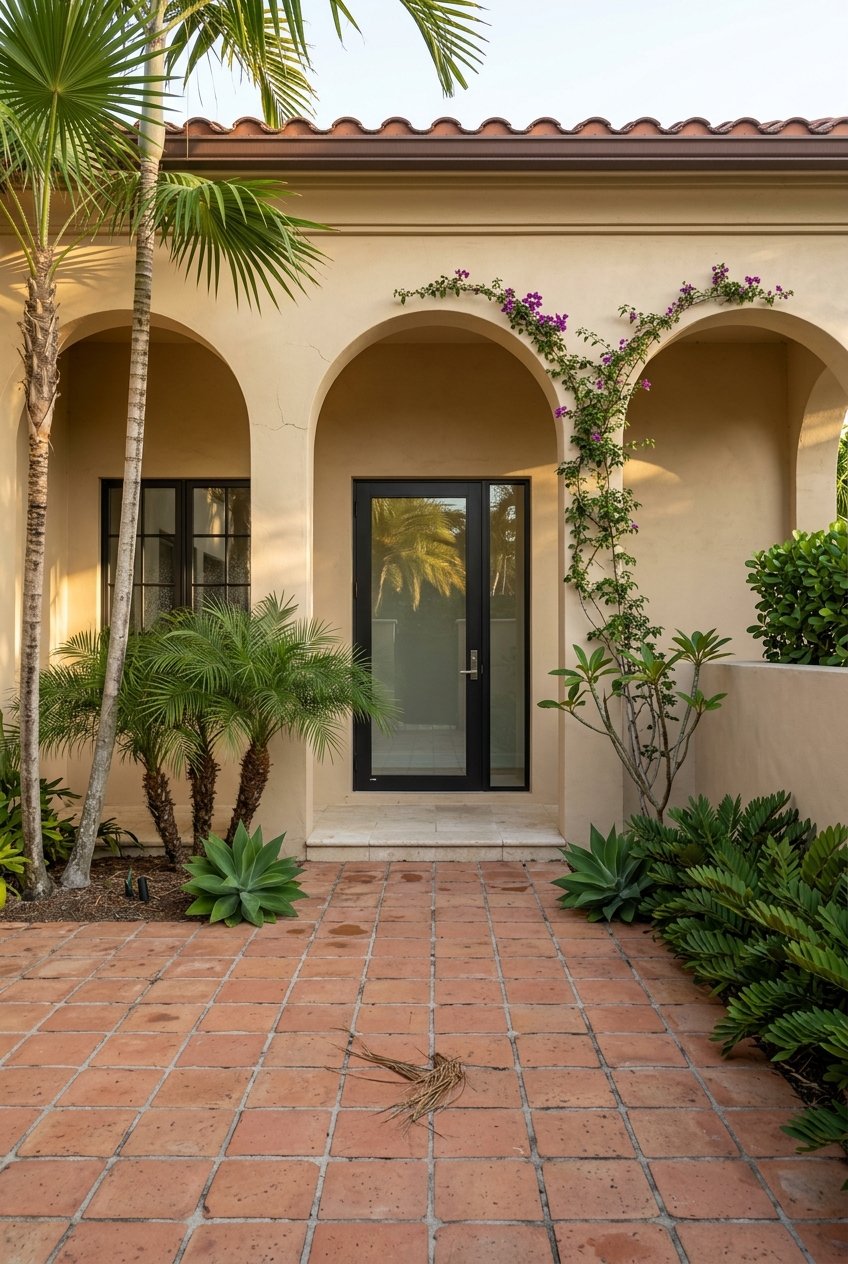
From the street, Spanish Revival tends to feel warm, layered, and historic. Typical features include clay tile roofs, stucco finishes, arched windows and doors, arched walkways or loggias, towers, and ornamental ironwork.
In Coral Gables, those elements are often paired with barrel tile roofs, limestone, and elaborate surrounds. If you are drawn to texture, ornament, and a strong sense of arrival, this style often delivers that in a memorable way.
Spanish Revival interior feel
Inside, Spanish Revival homes often create a sequence of spaces rather than one large open volume. Porches, courtyards, and loggias can act as transitions between indoors and outdoors, giving the home a more layered rhythm.
For many buyers, that translates to a home that feels intimate, character-rich, and tied to outdoor living in a classic South Florida way. It can be especially appealing if you value architectural detail over a fully open-plan layout.
Spanish Revival renovation factors
If a property is designated historic or sits within a historic district, most exterior work requires a Certificate of Appropriateness before a permit can be issued. Some additions or variances may also require historic review.
Coral Gables preservation guidance says additions should be differentiated but compatible. Original features such as window configuration, loggias, and other character-defining details are expected to be retained when possible, so renovation planning usually requires more care and documentation.
Who Spanish Revival suits best
Spanish Revival often fits buyers who want a strong sense of place and a home that feels connected to Coral Gables’ original identity. If you appreciate ornament, historic continuity, and architecture that makes an impression from the street, this style may feel like the more natural match.
Contemporary homes in Coral Gables
Contemporary homes offer a very different expression. They are generally cleaner, lighter, and more horizontal than Spanish Revival homes, with less ornament and a stronger focus on simple forms.
National Park Service references describe contemporary houses as postwar modern designs influenced by International and Ranch styles. Typical characteristics include flat or low-pitched roofs, little ornamentation, varied wall surfaces, large or ribbon windows, and a closer integration with the landscape.
Contemporary curb appeal
Contemporary homes usually emphasize clean lines, broad glazing, and a minimalist silhouette. In Coral Gables, that look can work well when the home’s massing, roofline, and overall scale remain compatible with the street and surrounding homes.
That local point matters. Even when a home feels modern, Coral Gables still evaluates how it relates to neighborhood context rather than viewing it as a stand-alone design object.
Contemporary interior feel
If you prefer open floor plans, contemporary homes may have the edge. They are more likely to offer flexible spaces, larger glass areas, and stronger visual connection to the outdoors.
For buyers who want more daylight and a simpler visual language, that can make daily living feel easier and more fluid. The overall effect is often calmer and less formal than a traditional Spanish Revival layout.
Contemporary renovation factors
Contemporary does not mean unrestricted. Coral Gables still reviews new work for compatibility, including scale, roof pitch, material and finishes, height, massing, window types and placement, and the relationship of voids and solids.
The city’s guidance also notes that metal roofs can be acceptable in some areas for High Modern, Post-War Modern, Ranch, or Key West and Florida Vernacular homes if the roof design is harmonious with the context. So while contemporary homes may feel more flexible in some cases, design review remains a major part of the ownership picture.
Who contemporary suits best
Contemporary homes usually appeal to buyers who want simplicity, openness, and less visual ornament. If your priorities include flexible layout, cleaner lines, and a more modern day-to-day feel, this style may better support the way you want to live.
A side-by-side comparison
Here is the simplest way to think about the tradeoff in Coral Gables:
| Category | Spanish Revival | Contemporary |
|---|---|---|
| Street presence | Warm, layered, historic | Clean, minimal, streamlined |
| Typical features | Stucco, clay tile, arches, ironwork, loggias | Flat or low-pitched roofs, large windows, simple forms |
| Interior layout | More room-by-room, indoor-outdoor transitions | More open plan, flexible space, broad glazing |
| Renovation path | Often more complex for historic properties | Still reviewed for compatibility, but may feel more adaptable |
| Best fit | Buyers who value character and continuity | Buyers who value openness and simplicity |
The local review process you should understand
In Coral Gables, your choice is not only about style. It is also about process. The Board of Architects reviews color, materials, fenestration, proportion, and overall order, and the city requires a tree survey and tree protection plan for Development Review Committee and Board of Architects submissions as well as demolition permits.
The city’s single-family best-practices guidance also emphasizes human scale, tree-lined streets, front porches, setbacks, and garages that do not dominate the front facade. In other words, whether you prefer Spanish Revival or contemporary, the goal is a house that contributes positively to the street.
Historic status can change the equation
If you are considering a designated historic property or a contributing structure within a historic district, ownership can come with a more formal approval path. A Certificate of Appropriateness is generally required before most exterior work begins, before a building permit is issued, and before a variance can be granted.
Interior remodeling is generally not subject to the same review unless tax relief is being sought. There may also be a financial incentive, since owners of designated historic properties or contributing structures may qualify for a 10-year city-and-county ad valorem tax freeze on qualifying improvements.
That said, the tax benefit does not replace the review process. For buyers comparing style options, that means a historic Spanish Revival home may offer preservation upside, but it can also require a more detailed planning mindset.
A few terms worth knowing
As you compare homes in Coral Gables, these terms come up often:
- Massing: the overall bulk and volume of a building
- Fenestration: the arrangement and placement of windows and doors
- Loggia: a covered outdoor passage or room, common in Mediterranean and Spanish Colonial Revival design
- Infill: new construction inserted into an existing streetscape, where compatibility matters more than mimicry
- Certificate of Appropriateness: approval required before most exterior work on a designated landmark or property in a historic district
- Contributing structure: a property that contributes to a historic district’s significance and may be eligible for preservation incentives
- Roof pitch: the slope of the roof, which is one of the factors reviewed for compatibility
How to choose the right fit for you
If you are deciding between these two styles, start by thinking beyond photos and finishes. Ask yourself how much you value historic character, how open you want the layout to feel, and how comfortable you are with potential design review if you plan to renovate.
Spanish Revival usually offers stronger historic character, more visible ornament, and closer visual alignment with Coral Gables’ original Mediterranean identity. Contemporary usually offers cleaner lines, more openness, and greater interior flexibility.
The key local takeaway is simple. In Coral Gables, neither style is judged in isolation. What matters most is how the house fits its street, lot, and architectural context, and how well that aligns with the way you want to live.
If you want a design-savvy perspective on how a specific Coral Gables property fits your goals, Jorge Hidalgo can help you evaluate architecture, lifestyle fit, and ownership considerations with a polished, highly personalized approach.
FAQs
What makes Spanish Revival homes distinctive in Coral Gables?
- Spanish Revival homes in Coral Gables often feature stucco finishes, clay or barrel tile roofs, arches, loggias, and ornamental details that align closely with the city’s Mediterranean architectural identity.
What defines a contemporary home in Coral Gables?
- Contemporary homes in Coral Gables typically have clean lines, flat or low-pitched roofs, large windows, minimal ornamentation, and more open interior layouts, while still being reviewed for neighborhood compatibility.
What is a Certificate of Appropriateness in Coral Gables?
- A Certificate of Appropriateness is the approval generally required before most exterior work begins on a designated landmark or a property within a historic district.
Are renovations reviewed differently for historic homes in Coral Gables?
- Yes, designated historic properties and contributing structures in historic districts usually face a more formal exterior review process, especially for additions, changes, and permit-related work.
How should a buyer choose between Spanish Revival and contemporary in Coral Gables?
- A buyer should compare both styles based on lifestyle fit, desired layout, tolerance for design review, and how much value they place on historic character versus simplicity and flexibility.
