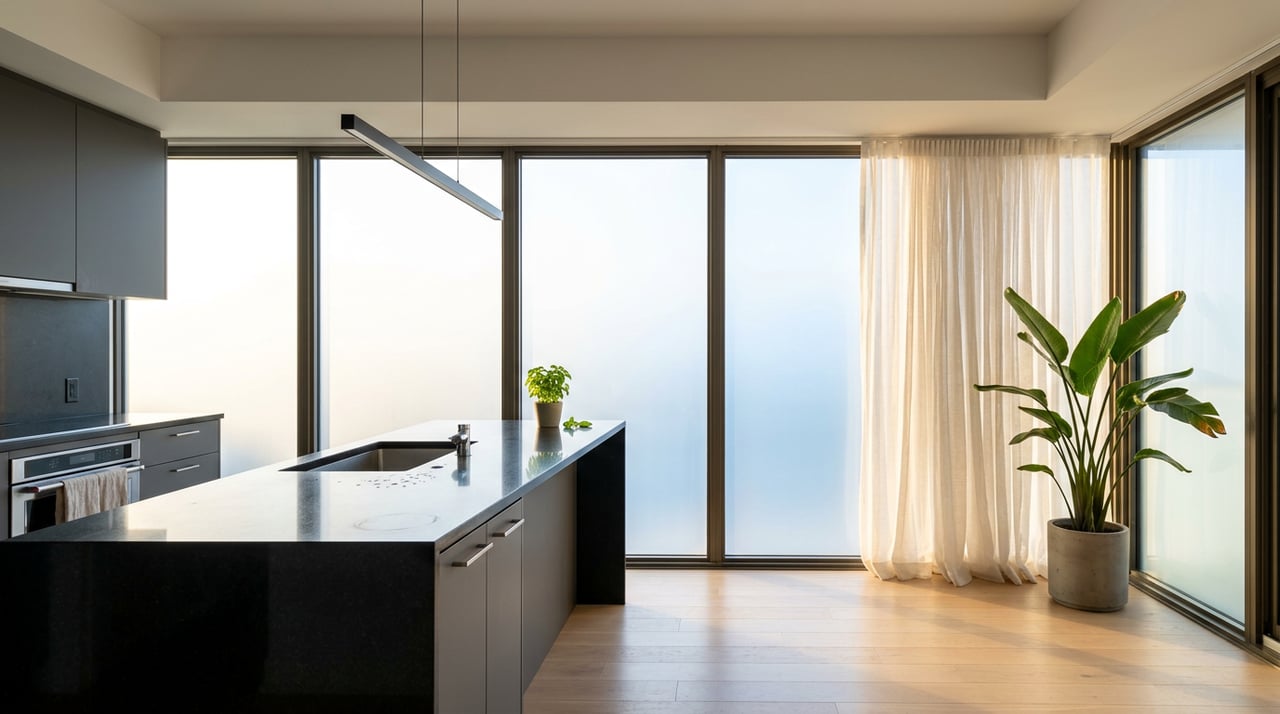
Walk out of a residential tower on NE 1st Avenue on a weekday morning and the first thing you pass might be a coffee counter with no sign visible from the street. Chapola sits inside the lobby of one of downtown's residential buildings, serving coffee, matcha, and pastries to people who live upstairs before most of them have left the building. A block or two later, a Metromover car glides past on its elevated track, empty enough that it looks like it's running for no one in particular.
It isn't. That car is doing more daily work than its tourist reputation suggests, and the restaurants opening around it this year are being built at a scale that only makes sense once you notice who is actually riding it.
Downtown Miami added several new food and coffee spots in 2026, and almost all of them are small. Not small in the marketing sense of "intimate," but literally small: a residential-tower cafe, a second location of an existing pizza shop, a ten-table Vietnamese spot that started as a pop-up. Meanwhile, the most recognizable restaurant name with actual downtown history, Fooq's, chose to come back somewhere else entirely, and much bigger. That split, small bets downtown and a big bet in Little River, is not a coincidence. It's a read on who downtown's foot traffic actually is, and it starts with a transit system most people treat as a novelty ride.
The Ride Everyone Treats Like a Photo Op
Metromover shows up in every visitor guide to downtown as a free, air-conditioned way to see the skyline from above street level, and that's true. It's also table stakes for how a lot of downtown residents actually get to work. The system runs fare-free across three loops, Omni, Inner, and Brickell, connecting 21 stations that string together the Kaseya Center, Bayside Marketplace, Miami-Dade College, and the Adrienne Arsht Center without a single fare gate. In the first quarter of 2026, that system carried roughly 25,100 rides a day. That's not sightseeing volume. That's commuting volume, running on a track that opened in 1986 and was extended into the Omni and Brickell loops in 1994.
The system is also mid-upgrade right now. Miami-Dade's transit department has been running service alerts through the summer as it works on reliability improvements, including an Omni Loop schedule change that pushed the start of weekend service to 2 p.m. on a recent Saturday. If you've noticed a car running later than usual lately, that's why. It's a maintenance story more than a disruption story, but it's the kind of detail that only shows up if you're actually checking the app before you leave the apartment, which is exactly the audience the new restaurants below are counting on.
A Park That Keeps a Schedule
The other piece of downtown's free infrastructure is Bayfront Park, and it runs on more than open lawn and skyline views. Twice a week, Monday and Thursday mornings, the park hosts a donation-based yoga class, suggested contribution $15, mat and water bottle required. It's not a wellness brand activation. It's a recurring line item on the park's own calendar, the kind of thing that only earns a spot on a regular's schedule rather than a visitor's itinerary.
The park's bones are older and more specific than most people walking through it realize. Its defining 1980s redesign came from sculptor Isamu Noguchi, who built the Challenger Memorial, the Light Tower, and the Slide Mantra into the landscape, pieces that are still there under whatever event is happening that week. The park is also where the Riverwalk begins, the pedestrian path that runs along the north side of the Miami River before it eventually connects toward Brickell. None of this requires a ticket. All of it requires knowing it's there, which is a resident's advantage over a tourist's.
Put the park and the people mover together and you get a picture of downtown that doesn't match the postcard version: a resident base that moves through the neighborhood on foot and on a free elevated train, on a schedule built around free or near-free amenities, several times a week.
The New Addresses Downtown Chose This Year
That's the customer base the newest food spots are built for, and their size gives it away.
Tâm Tâm, at 99 NW 1st Street, spent its early life as a pop-up before opening permanently downtown, serving Vietnamese dishes built around a quán nhậu style of eating meant for a table that keeps ordering rather than a single entree. It landed on the Miami Spice program for the first time this year, putting a $40 to $65 prix fixe menu within reach of the exact residents who might otherwise pass on a full-price night out.
Giotto Maestro Della Pizza opened its second location downtown at 75 NE 16th Street this year, a straight expansion of the same family-run Neapolitan pizza and pasta menu that's been running at its original South Beach spot for more than a decade. It's not a reinvention. It's the same shop, closer to a different set of front doors.
Chapola, the cafe inside a downtown residential tower, doesn't even try to be a destination. It's a counter for coffee, matcha, and pastries positioned exactly where people already are, on their way out the door.
And Cactus Club Cafe, the Vancouver-based restaurant group opening its first United States location on the ground floor of the Citigroup Center this year, is the outlier in scale but not in logic. It's landing with Biscayne Bay views in a building full of daily foot traffic rather than in a freestanding location that has to generate its own draw.
Why the One That Left Went Bigger
Set that pattern against Fooq's. The restaurant opened in downtown Miami back in 2015, built a following, and closed in 2021, with food press describing this year's comeback as ending a four-year hiatus. Its return in 2026 isn't downtown at all. It's landing in Little River in a two-story, 14,000-square-foot space with a dining room downstairs, an outdoor patio, and an upstairs late-night listening lounge called the Lion's Den. That's a destination bet: a restaurant designed to pull people from across the city for a full night out, which requires parking, a reservation, and a reason to leave your own neighborhood.
Downtown's new openings are making the opposite bet, and the free infrastructure explains why it's a reasonable one. A ten-seat cafe or a second pizza location doesn't need to pull people in from across Miami. It needs the people already walking to the Metromover station, already heading to Bayfront Park for Monday yoga, already living in the tower upstairs. Downtown in 2026 has enough of that walking, transit-riding, schedule-keeping population that a small format can work without ever trying to be a citywide draw. Fooq's needed the whole city. Chapola just needs the elevator bank.
None of this shows up if you're comparing downtown to other neighborhoods by restaurant count or Yelp stars. It shows up when you notice that the businesses betting small are the ones betting on people who are already here every day, using infrastructure that costs nothing and asks for nothing more than showing up on the right morning.
That's the version of downtown that doesn't make it into the skyline photos: a neighborhood quietly built for repeat use, one free ride and one small counter at a time.
If you're a downtown resident who's started noticing this pattern for yourself, or you're weighing what a Biscayne Boulevard address is actually worth day to day, Jorge Hidalgo has spent years reading Miami's condo markets the way this piece reads a coffee counter, for what's actually happening at street level, not what's in the brochure. Schedule a Confidential Consultation to talk through what that means for your next move.
