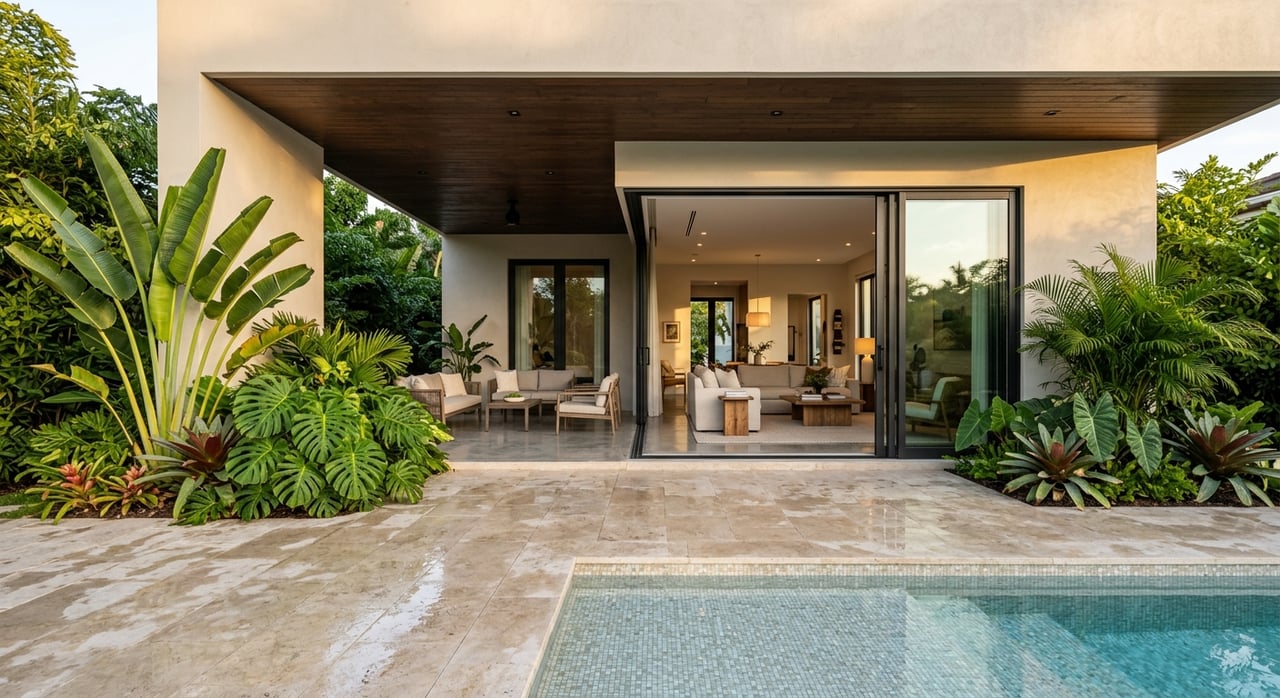
What if the most valuable square footage in your Coconut Grove home is not fully indoors or fully outdoors? In a neighborhood shaped by tropical landscaping, mature tree canopy, and a long wet season, the best homes often live in the space between. If you are planning a purchase, renovation, or future resale strategy, understanding how indoor-outdoor living works in Coconut Grove can help you make smarter design decisions. Let’s dive in.
Why Coconut Grove Favors This Design
Coconut Grove is especially well suited to indoor-outdoor living because its planning framework places real value on landscape character, green space, tropical vegetation, and tree canopy. The City of Miami’s Neighborhood Conservation Districts guidance shows how local planning continues to focus on preserving the Grove’s distinct physical character.
That matters because a home here is rarely just a structure on a lot. In many cases, it is part of a larger sequence of shaded entries, porches, terraces, courtyards, and gardens. In Coconut Grove, strong design often means connecting the home to the landscape instead of separating the two.
Start With Climate Reality
South Florida weather makes indoor-outdoor living appealing, but it also makes it technical. According to the National Weather Service in Miami, the summer season lasts about 152 days, and 69% of annual precipitation falls during that time.
For you as a homeowner, that means outdoor areas need to do more than look beautiful on a sunny day. They need to stay comfortable, drain well, and remain usable during humidity, afternoon rain, and storm season. Shade, covered transitions, and thoughtful materials are core features, not upgrades.
Think In Outdoor Rooms
The most natural indoor-outdoor homes in Coconut Grove tend to feel like a collection of outdoor rooms. That can include a front porch, a side courtyard, a covered terrace off the main living area, or a screened lanai near the pool.
This layered approach fits the neighborhood’s planning logic. The NCD-3 guidelines encourage features like porches, loggias, windows, entries, and plazas in certain areas, while also protecting open space and the dominant tree canopy.
Design Features That Work Well
If you are evaluating a home or planning improvements, these features tend to align well with Coconut Grove living:
- Deep porches and covered terraces
- Loggias and screened lanais
- Courtyards that create privacy and airflow
- Large sliding glass openings paired with shade
- Walkways and patios that connect rather than divide spaces
- Landscape edges that soften transitions between house and garden
The goal is not to push every activity outside. It is to create spaces that feel flexible, comfortable, and visually connected year round.
Prioritize Shade And Covered Transitions
One of the biggest mistakes in tropical design is creating beautiful open-air space without enough protection from sun and rain. In Coconut Grove, a terrace without cover may photograph well, but it may not function well during much of the year.
Covered patios, roof overhangs, and protected seating areas can extend daily usability. They also help bridge the interior and exterior so your home feels larger and more comfortable without depending only on enclosed square footage.
Why This Matters For Resale
Buyers in Coconut Grove often respond to homes that feel composed and livable, not just oversized. A well-designed covered terrace or courtyard can make a property feel more architecturally resolved and more in tune with the neighborhood.
For sellers, that means indoor-outdoor design is not just a lifestyle feature. It can also support stronger presentation and broader appeal when a home is brought to market.
Plan Drainage From Day One
In a rainy climate, drainage is part of design. Miami-Dade notes that the county is close to sea level and that groundwater sits just below the surface, which can leave rainwater with limited places to go during major rain events. The county’s flood protection resources also point homeowners to official flood-hazard tools by address.
If you are improving outdoor living space, drainage should be considered early rather than after water starts pooling. Surface design, grading, and permeable materials all play a role in whether a patio or garden remains usable.
Smart Drainage Ideas
The University of Florida IFAS recommends using the right plant and hardscape in the right place, with strategies such as pervious paving and stormwater tools. For Coconut Grove homes, practical options may include:
- Permeable pavers for patios and walkways
- Swales that move water naturally
- Dry wells where appropriate
- Rain gardens that support drainage and planting
- Rain catchment features as part of a broader landscape plan
These elements can help outdoor spaces stay cooler, drain better, and feel more integrated into the site.
Use Landscape For Privacy
Privacy in Coconut Grove often works best when it comes from planting, not just walls. Because the neighborhood values greenery and canopy, layered landscaping tends to feel more natural than a hard perimeter alone.
That does not mean privacy has to look wild or informal. According to UF/IFAS, cocoplum is native, evergreen, and tolerant of salt and wind, with uses that include hedging and screening. Depending on the form you choose, it can work as a substantial privacy hedge or a softer, lower screen.
A Better Privacy Strategy
Instead of relying on a single hedge line, consider a more layered approach:
- A primary evergreen hedge for screening
- Smaller shrubs to soften the base
- Shade trees to cool patios and reduce glare
- Neat pruning and defined edges for a polished look
UF/IFAS also notes that native plants can be trimmed to feel more ornamental and that hardscape can help shape a tidier visual result. In Coconut Grove, that balance often feels right: lush, but intentional.
Choose Materials That Fit The Setting
Hardscape matters as much as planting. In a hot, humid climate, some surfaces hold heat, reflect glare, or shed water too quickly. Others age more gracefully and feel better underfoot.
The same UF/IFAS guidance supports hardscape choices that function well in Florida landscapes, especially permeable surfaces that help manage water. If you are comparing properties, notice whether the outdoor materials support comfort and drainage or work against them.
Large Openings Need More Than Style
Sliding glass walls, oversized doors, and expansive openings can create a beautiful connection to the outdoors. In Coconut Grove, they can also frame garden views, improve natural light, and make entertaining easier.
But these elements need to be specified correctly for this market. Miami-Dade’s Product Approval system covers products such as windows, exterior glazing, exterior doors, skylights, and shutters, and the Florida Building Code requires protected openings in wind-borne debris regions.
That means if you are renovating or comparing homes, the conversation should include more than aesthetics. Impact-rated systems, approved protective coverings, and weather-ready detailing are all part of making indoor-outdoor design practical here.
Coordinate Pools, Privacy, And Safety
In Coconut Grove, many indoor-outdoor layouts naturally center on the pool terrace. That can create a strong lifestyle experience, but it also requires planning.
Miami-Dade explains that residential pool barriers can include screened patios, fences, walls, or combinations of these, and fences used as pool barriers require a building permit. In practice, the best layouts coordinate privacy design and pool-safety design from the beginning so the result feels seamless.
Check Historic And Tree Rules Early
Some Coconut Grove properties may be subject to historic review, and that can affect even smaller changes. The City of Miami states that work on historic properties may require a certificate of appropriateness, including certain window replacements.
The Grove’s conservation-district framework also ties closely to tree preservation and open-space character. If you are planning major work, it is wise to confirm whether tree review, arborist documentation, or historic approval may apply before finalizing your scope.
What Buyers And Sellers Should Notice
If you are buying in Coconut Grove, look beyond the square footage listed inside the walls. Pay attention to how the home handles shade, drainage, privacy, and transitions between indoor and outdoor areas.
If you are selling, focus on the features that make the outdoor experience feel complete. Covered seating, thoughtful planting, impact-aware openings, and a clean landscape plan can help buyers understand how the home lives, not just how it looks.
A Simple Evaluation Checklist
When you walk a Coconut Grove property, ask yourself:
- Is there enough shade for daily use?
- Are outdoor spaces covered where needed?
- Does the site appear to drain well?
- Do planting and hardscape feel intentional?
- Are privacy features soft and landscape-driven?
- Do large openings appear appropriate for local weather conditions?
- If there is a pool, does the layout account for safety requirements?
- Could historic or tree-related approvals affect future changes?
The best indoor-outdoor homes in Coconut Grove usually combine beauty with resilience. They feel lush, breezy, and connected to the landscape, but they also respect rain, wind, code, and long-term maintenance.
If you are considering buying or selling a Coconut Grove home, working with an advisor who understands design, presentation, and neighborhood context can make a meaningful difference. To discuss how these features affect property value, buyer appeal, and your next move, connect with Jorge Hidalgo.
FAQs
What makes indoor-outdoor living different in Coconut Grove homes?
- Coconut Grove homes often benefit from a landscape-first setting, mature tree canopy, and planning rules that support green space, porches, terraces, and open-air connections.
Why do Coconut Grove outdoor spaces need covered areas?
- South Florida’s long, humid, rainy season makes covered patios, overhangs, and protected transitions important for comfort and regular use.
What landscape features help with privacy in Coconut Grove yards?
- Layered planting, shade trees, and screening shrubs such as cocoplum can provide privacy while still fitting the neighborhood’s lush character.
How should drainage be handled in Coconut Grove outdoor design?
- Outdoor design should account for heavy rain with features like permeable pavers, swales, rain gardens, and other site-specific drainage strategies.
Do large glass doors and openings in Coconut Grove homes need special approval?
- They may need products that meet Miami-Dade approval standards, especially for windows, exterior doors, glazing, skylights, and storm protection.
What should homeowners know about pool design in Coconut Grove properties?
- Pool layouts should be planned alongside safety requirements because barriers such as fences, walls, or screened enclosures may be required and can affect the final design.
Can historic rules affect Coconut Grove home renovations?
- Yes. Some properties may require historic review, and certain projects may also involve tree-preservation or related neighborhood review requirements.
