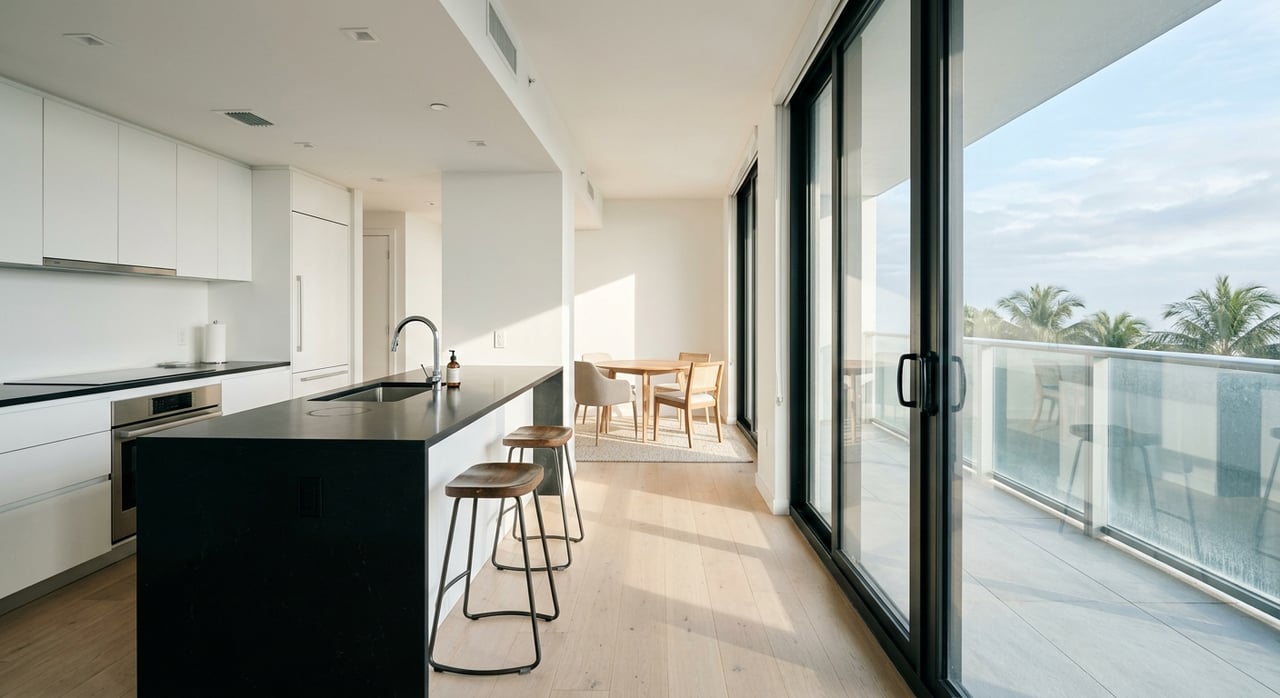
Ever wonder what your day could feel like if coffee, transit, waterfront views, culture, and nightlife were all within reach? That is the real appeal of living in Downtown Miami. If you are considering a condo here, this guide will show you how daily life actually unfolds and why so many buyers are drawn to its convenience, energy, and design-forward urban lifestyle. Let’s dive in.
Downtown Miami Feels Like a Real Neighborhood
Downtown Miami is often misunderstood as just an office district, but the reality is much broader. The Downtown Development Authority describes it as a 927-acre urban core that includes the Central Business District, Brickell, and the Arts + Entertainment District, with parks, museums, theaters, colleges, residences, hotels, retail, and government functions all layered together.
That mix shapes how you live here day to day. More than 101,000 people live Downtown, and the area supports about 155,000 jobs, which creates a constant rhythm from morning through late evening. Instead of separating work, errands, dining, and entertainment across long drives, Downtown brings them into the same few square miles.
For many condo buyers, that means your home is part of a vertical neighborhood. You are not just buying square footage. You are buying access to a lifestyle where convenience and activity are built into the setting.
Morning Starts Close to Home
A typical Downtown Miami morning can begin without ever needing to get in a car. The area has more than 350 eateries, according to the Downtown Development Authority, so your routine can be as simple as grabbing coffee in your building, stopping at a nearby café, or walking to a ventanita before work.
This is one of the biggest differences you feel when you live here. Sidewalk activity, nearby retail, and service density make small daily tasks easier to fit into your schedule. A quick market stop, a coffee run, or a breakfast meeting can happen within a short walk or ride.
The DDA also emphasizes active sidewalks, tree canopy, waterfront access, and mass transit within 5 to 10 minute walks as part of Downtown planning goals. In practical terms, that means the neighborhood is built to support movement and convenience, not just high-rise views.
Errands Feel More Efficient
In many parts of South Florida, even a simple errand can turn into a longer trip. Downtown Miami offers a different experience because shopping and services are woven into the district. The retail mix includes fashion, beauty, electronics, housewares, furniture, and travel gear, which adds another layer of everyday convenience.
If you value time, this matters. You can often stack your morning routine in a way that feels efficient and flexible. That is part of what gives Downtown its appeal for professionals, second-home buyers, and anyone who wants a more connected daily routine.
Getting Around Is a Major Lifestyle Upgrade
One of the strongest practical advantages of living in Downtown Miami is mobility. The free Metromover operates seven days a week through Downtown, Omni, and Brickell, with 21 stations and stops near major destinations like Kaseya Center, Bayside Marketplace, and Miami Dade College.
For residents, that means short trips can feel easy and low stress. You can move between neighborhoods, restaurants, offices, and entertainment spots without dealing with parking every time. That simple convenience changes the rhythm of daily life.
Downtown is also a regional transit hub. Miami-Dade County shows that key stations connect to Brightline, Metrorail, and Tri-Rail, and the DDA notes that Tri-Rail service began at MiamiCentral Station in January 2024. Metrorail also provides direct service to Downtown Miami and Miami International Airport.
Car-Light Living Is Realistic
If your goal is to drive less, Downtown makes that more realistic than many other Miami neighborhoods. The DDA also highlights the expanded all-electric Freebee service, which links Brickell, the Central Business District, and the Arts & Entertainment District to offices, museums, restaurants, and waterfront destinations.
For cyclists, the Downtown Miami Bike Network has added separated bike lanes and parking-protected bike lanes connecting Government Center, MiamiCentral, Miami Dade College, and several Metromover stations. That gives residents another practical way to move through the core.
You can still keep a car if you want one. Parking remains part of the Downtown mix, with garages, open lots, street parking, curbside valet, and more than 34,000 spaces managed by the Miami Parking Authority. So while the area supports car-light living, it does not force a car-free lifestyle.
Scenic Routes Add to the Experience
Not every transportation option here feels purely functional. The DDA also notes that the water taxi connects Bayside Marketplace, the Miami River, Key Biscayne, and Miami Beach. That kind of scenic mobility adds something rare to everyday life.
In Downtown Miami, even how you get around can become part of the lifestyle. A regular day can include elevated transit, a bayfront walk, or a ride along the water, all without leaving the urban core.
Afternoons Blend Work and Waterfront Time
Once the workday slows down, Downtown offers multiple ways to reset. The waterfront plays a big role in that. Bayfront Park spans 32 acres along Biscayne Bay and includes paved paths, a small sand beach, playgrounds, monuments, and wide water views.
If you like to walk, run, or bike, the Baywalk and Riverwalk are central to the neighborhood experience. Together they create a nearly 5-mile corridor along Biscayne Bay and the Miami River. The DDA reports that the Downtown Baywalk is 89% complete and the Miami Riverwalk and on-road Greenway are 68% complete, so access continues to evolve.
That matters because outdoor time is not an occasional extra here. It is part of the everyday rhythm. When your building sits near the water, stepping out for fresh air and skyline views can become a regular habit.
Culture Is Part of Daily Life
Downtown Miami stands out because it combines residential towers with some of the city’s major cultural destinations. Maurice A. Ferré Park, a 21-acre bayfront park, is home to Pérez Art Museum Miami and the Patricia and Phillip Frost Museum of Science.
Nearby, you also have HistoryMiami and the MDC Museum of Art and Design at the Freedom Tower campus. This gives Downtown a civic and cultural depth that feels different from neighborhoods defined more narrowly by dining or office use.
For buyers who care about design, architecture, and the broader city experience, this is a meaningful part of the appeal. Your neighborhood can include not just views and amenities, but also museums, exhibitions, performances, and public spaces that enrich daily life.
Evenings Can Stay Flexible
Some evenings call for a quiet waterfront stroll. Others call for dinner, a performance, or an event. Downtown Miami supports both.
The Adrienne Arsht Center presents close to 400 events each year, and the wider area also includes Kaseya Center, Olympia Theater, and Bayside Marketplace. Bayside combines shopping, dining, bars, and marina activity, which makes it one of the places where the neighborhood’s energy is easy to feel.
The nice part is flexibility. You do not need a full plan to enjoy the area. You can decide in real time whether the night looks more like a casual dinner, a show, a bay walk, or something that goes later.
Nightlife Extends the Day
Downtown Miami has a true day-to-night identity. The DDA describes it as a premier nightlife hotspot, with options ranging from happy hour bars to well-known late-night venues like Club Space and E11EVEN.
For residents, that does not mean every night has to be high energy. It means you have choices. A typical evening can move from dinner to a performance, then to a waterfront walk, and finally to a late-night destination without needing to leave the neighborhood.
That level of variety is part of what keeps Downtown feeling dynamic. It supports both routine and spontaneity, which is a big reason urban buyers are drawn to it.
Condo Living Is Amenity-Driven
If you are considering a home here, the condo lifestyle itself is a major part of the story. The DDA’s residential market materials show that Greater Downtown condo communities commonly emphasize features like pools, clubhouses, fitness centers, and security.
Rental communities may also include rooftop pools, coworking areas, game rooms, and libraries. Across more than 200 residential buildings, the overall pattern is clear: Downtown living is designed around convenience, shared amenities, and service-oriented residential experiences.
This is not typically about yard space or separation from activity. It is about streamlined living in a vertical environment, often with design-forward common areas, skyline or water views, and amenities that support how you actually spend your time.
The Neighborhood Keeps Evolving
Downtown’s development pipeline remains active, with existing, under-construction, and planned projects spread across the Central Business District, Brickell, and the Arts & Entertainment District. The DDA also highlights mixed-use projects that combine residences with retail, office, marinas, parking, fitness clubs, rooftop lounges, spas, and dining.
For buyers and investors, that evolution is important. It suggests a neighborhood that is still building out its experience and refining its waterfront and mixed-use identity. In other words, Downtown is not static. It continues to add new layers of convenience and lifestyle value.
How Downtown Compares to Nearby Areas
Downtown Miami often appeals to buyers who want a broad urban experience. Compared with Brickell, which the DDA identifies as the Financial District, Downtown can feel more civic and cultural because it concentrates museums, theaters, college campuses, government functions, and major event venues within the same core.
Compared with Edgewater, Downtown typically feels more transit-connected and destination-rich. City of Miami materials describe Edgewater historically as a low-density residential neighborhood north of Downtown along Biscayne Bay, which helps explain why the two areas offer different daily rhythms.
That does not make one better than the other. It simply means Downtown is often the better fit if you want a highly connected, event-filled, car-light condo lifestyle with a true urban pace.
Who Downtown Miami Fits Best
Downtown Miami tends to work especially well for buyers who want convenience, vertical living, and access to culture and transit. If you like the idea of walking to coffee, using transit for short trips, spending time by the bay, and ending the day with dining or events nearby, the lifestyle can feel natural here.
It can also appeal to investors and second-home buyers who value a neighborhood with strong residential density, active development, and a wide mix of attractions. The area’s scale, connectivity, and amenity-rich housing stock support a use pattern that is both practical and lifestyle-driven.
The key is understanding what you are choosing. Downtown is not quiet suburban living. It is a layered urban environment where architecture, movement, and convenience shape the day from morning to night.
If that sounds like the way you want to live, Downtown Miami offers one of the most complete condo lifestyles in South Florida. And if you want help finding the right building, floor plan, or design fit, Jorge Hidalgo offers a thoughtful, high-touch approach tailored to Downtown Miami living.
FAQs
What is daily life like in Downtown Miami for condo residents?
- Daily life often includes walkable coffee stops, nearby errands, free Metromover access, waterfront time, dining, and evening entertainment within the same urban core.
What transportation options do Downtown Miami residents have?
- Residents can use the free Metromover, Metrorail, Tri-Rail connections at MiamiCentral, Brightline access, Freebee service, bike lanes, water taxi routes, and parking options throughout Downtown.
What amenities are common in Downtown Miami condos?
- Common condo amenities in Greater Downtown often include pools, fitness centers, clubhouses, and security, while some residential communities also offer rooftop pools, coworking areas, game rooms, and libraries.
What makes Downtown Miami different from Brickell?
- Downtown Miami generally feels broader and more civic and cultural, while Brickell is identified by the Downtown Development Authority as the Financial District.
Is Downtown Miami good for car-light living?
- Yes, Downtown Miami is one of the more practical places in the area for car-light living because of free local transit, regional rail connections, bike infrastructure, and dense everyday services.
What can you do after work in Downtown Miami?
- After work, residents can enjoy Bayfront Park, the Baywalk or Riverwalk, museums, performances at the Adrienne Arsht Center, events at Kaseya Center, dining, bars, and nightlife options nearby.
